The Parrot Chat
Everything you need to know about caring for Quakers, Conures, Cockatiels, Caiques, and other mid-sized parrots. Learn, share, and connect.
Did You Know? Cool Quaker Parrot Facts
Quaker Parrots Are the Only Parrots That Build Nests
Unlike every other parrot species that nests in tree cavities, Quaker parrots (Monk Parakeets) build elaborate stick nests that can weigh over 200 pounds and house dozens of families. These multi-chamber condos even have separate rooms for egg incubation and sleeping.
Mid-Sized Parrots Have the Biggest Personalities
Conures, Quakers, Cockatiels, Caiques, and Ringnecks are incredibly social, learn to talk, and form deep bonds. Quakers can learn 50-100 words and use them in context.
Quaker Parrots Can Live 20-30 Years
With proper diet, stimulation, and natural perches for healthy feet, Quakers routinely live into their late twenties. Proper foot care with varied-diameter natural wood perches is crucial for longevity.
Why Natural Perches Matter
Your bird spends the majority of its life standing. The perch under their feet is one of the single most important pieces of their environment.
of a bird's life is spent gripping a perch
cause of foot disease is uniform-diameter dowel perches
different perch diameters recommended per cage
of captive birds develop foot issues from improper perches
The Problem with Dowel Perches
Uniform-diameter dowel perches force your bird to grip the exact same way every second of every day. This causes pressure sores, arthritis, and bumblefoot -- a painful bacterial infection of the foot pad. Plastic and concrete perches are even worse, causing abrasions and thermal burns from heat transfer.
Why Natural Wood is the Answer
Natural branches vary in diameter along their length, forcing your bird to constantly adjust their grip. This exercises different foot muscles, promotes blood circulation, and naturally files nails. The bark texture provides mental enrichment and beak maintenance through safe chewing.
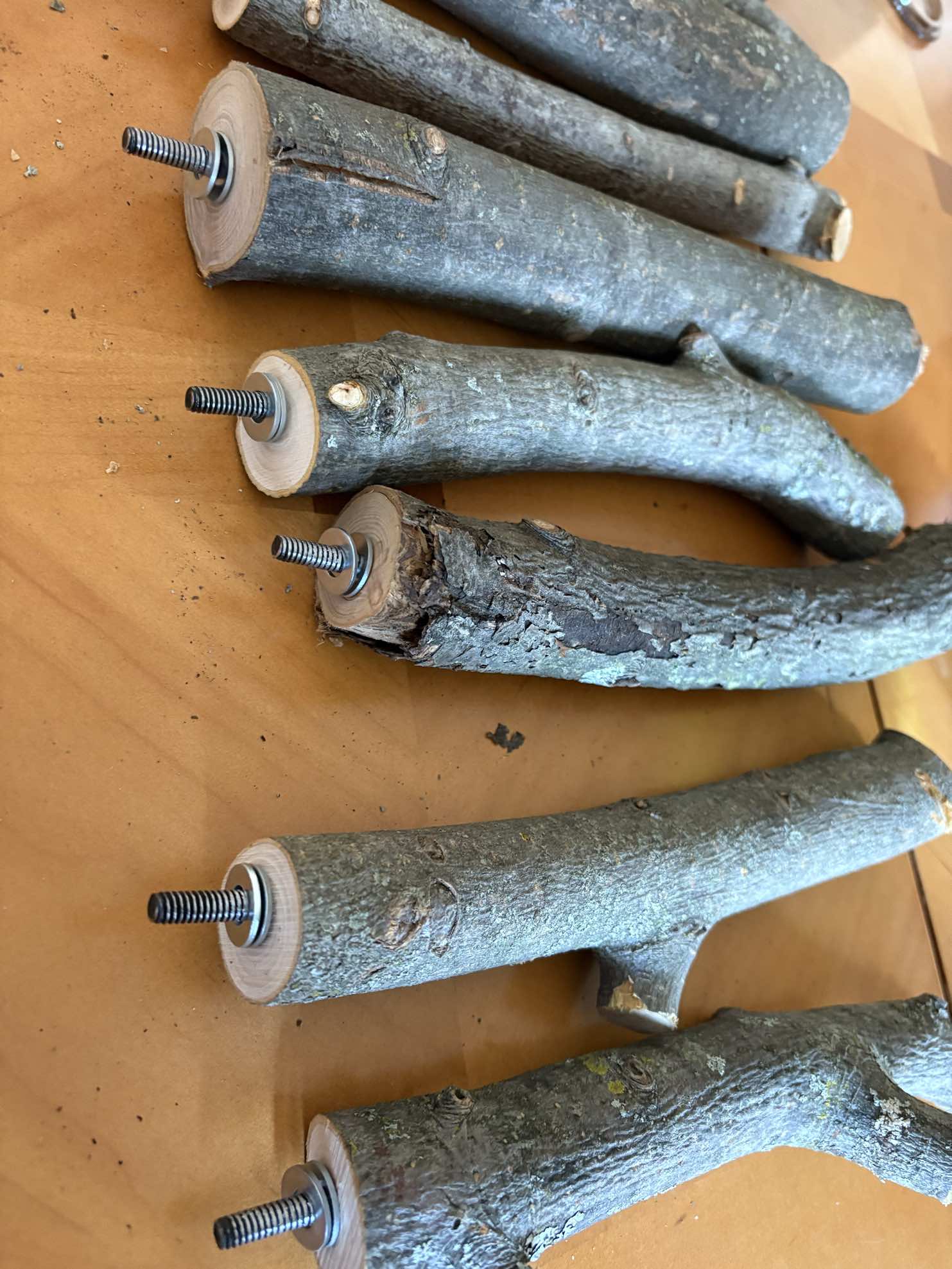
Hand-cut apple wood perches with stainless steel mounting hardware, made in Upstate NY.
Bird-Safe vs. Toxic Woods
Not all wood is created equal. Some trees produce oils, tannins, and chemicals that are deadly to parrots. Always verify the species before putting any branch in your bird's cage.
Safe Woods for Parrots
The gold standard. Soft enough to chew, perfect bark texture, bird-safe. Excellent for perches and chew sticks.
Naturally twisted shapes provide varied grip diameters. Excellent for foot exercise and climbing.
Extremely hard and durable. The smooth, dense surface is great for larger birds who need a sturdy perch.
Soft and safe. Great for birds who love to strip bark. Provides enrichment and beak maintenance.
Strong, naturally textured bark. Holds up well and provides good grip for mid-sized parrots.
Hard, smooth grain. Safe for all species. Makes excellent long-lasting perches.
Toxic / Unsafe Woods -- Never Use
Aromatic oils are toxic to bird respiratory systems. Even cedar shavings are dangerous.
Contains cyanogenic glycosides in the bark and wood. Never use fresh or dried cherry branches.
Contains toxic phenols. The dust is especially harmful to bird lungs.
High tannin content can cause digestive distress and organ damage over time.
Glue chemicals, formaldehyde, and pressure-treatment toxins are deadly to birds.
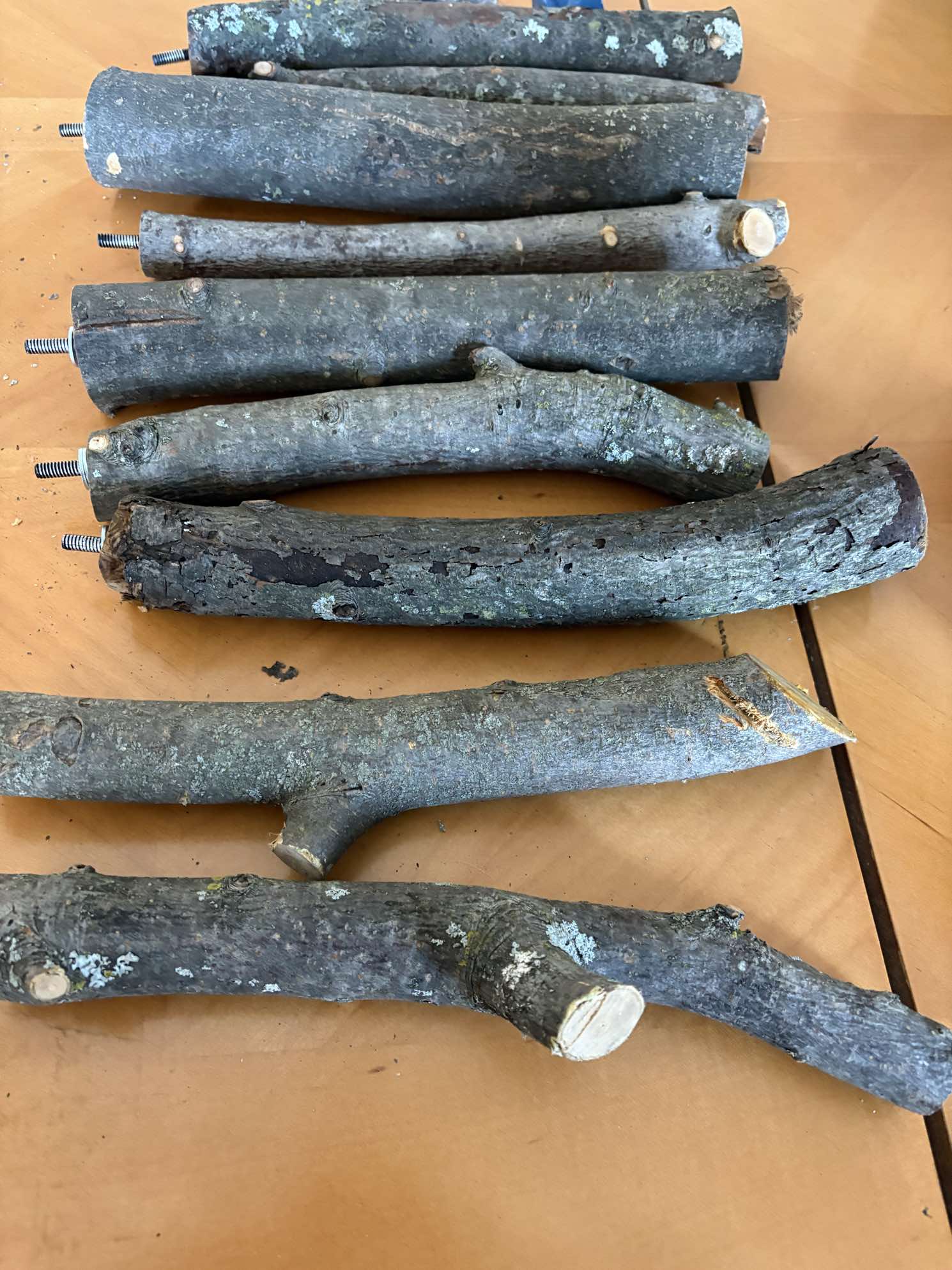
Every branch is unique in diameter and texture -- exactly what your bird's feet need.
Best Foods for Mid-Sized Parrots
A seed-only diet is a death sentence. Parrots need a varied diet of pellets, vegetables, fruits, and grains to thrive. Here is what avian vets recommend.
Vegetables (Daily Staple)
Vegetables should make up 30-40% of your parrot's diet. Serve fresh, washed, and chopped into small pieces.
Fruits (Treats & Variety)
Fruits are high in sugar. Offer 2-3 times a week as treats, not daily staples. Always remove apple seeds.
Grains & Legumes (Protein & Energy)
Great source of plant protein. Cook without salt or seasoning. Can be mixed with veggies for "chop" meals.
Pellets (Nutritional Base)
High-quality pellets should be 50-60% of the diet. Avoid colored or flavored pellets with added sugars and dyes.
Foods That Can Kill Your Parrot
These are not just "bad" -- many are acutely fatal even in tiny amounts. Memorize this list and keep these away from your bird at all times.
The Importance of Out-of-Cage Time
Mid-sized parrots need a minimum of 2-4 hours of supervised out-of-cage time every single day. This is not optional -- it is essential for their physical and mental health.
Physical Exercise
Flying, climbing, and exploring builds muscle strength, maintains cardiovascular health, and prevents obesity. Mid-sized parrots need wing-flapping exercise that a cage simply cannot provide.
Mental Stimulation
New environments, textures, and interactions prevent boredom-based behaviors like feather plucking, screaming, and cage aggression. A stimulated bird is a happy bird.
Bonding & Socialization
Parrots are flock animals. Out-of-cage time with their human family satisfies their deep social needs and strengthens the trust bond. This is when they learn to talk, play, and be handled.
Foot Health
Walking on varied surfaces (carpet, wood, your shoulder) exercises different foot muscles. Combined with varied-diameter natural perches, this is the best prevention for bumblefoot.
Safety Checklist for Out-of-Cage Time
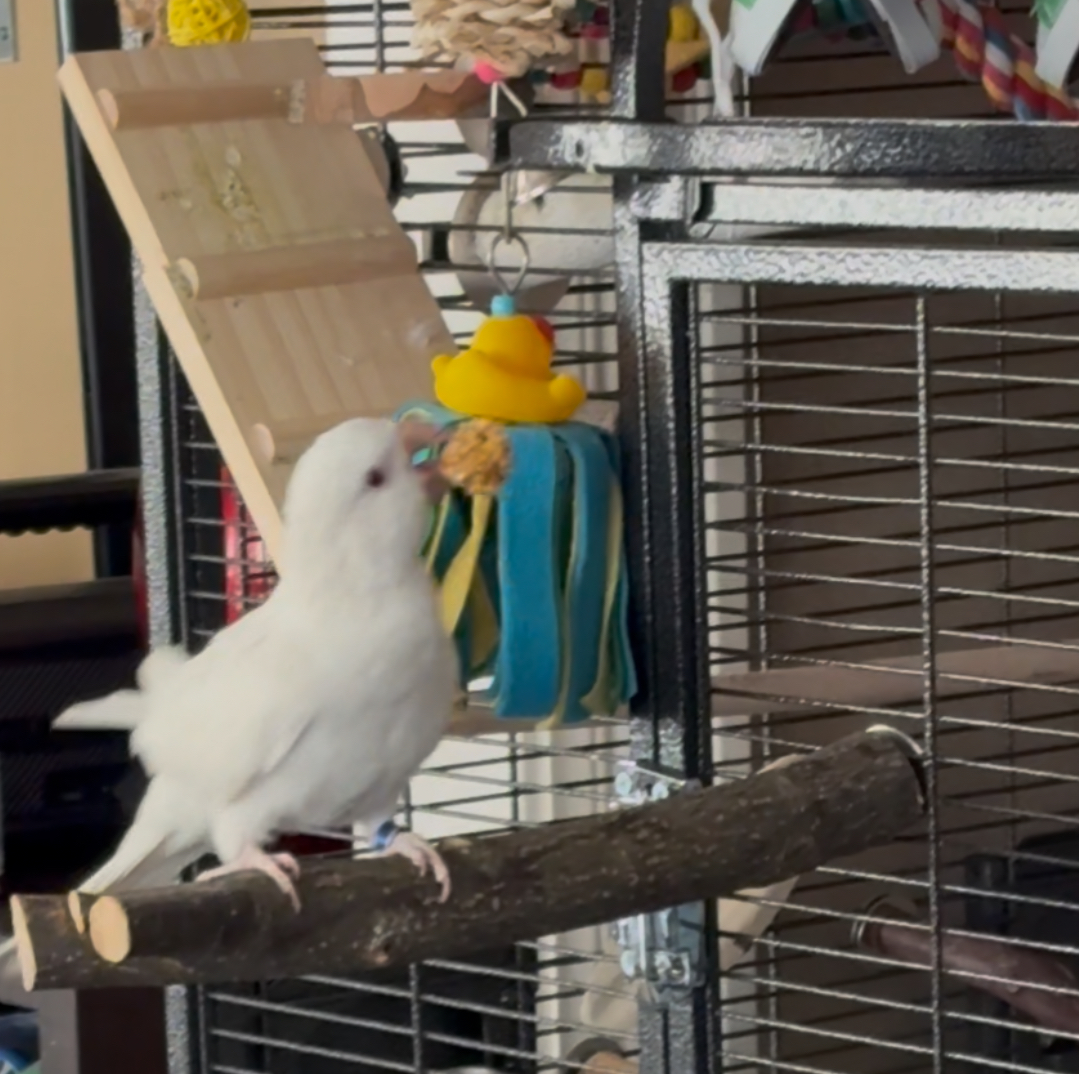
Cinnamon enjoying her out-of-cage time on a natural apple wood perch. A happy bird is an active bird.
The Forum
Share your parrot stories, ask the flock for help, or give tips and advice to fellow mid-sized parrot owners. Everyone is welcome.
Start a Conversation
No posts yet. Start the conversation!